
Preservation of the Sadler & Calloway Houses in Historic Tuskegee, Alabama.
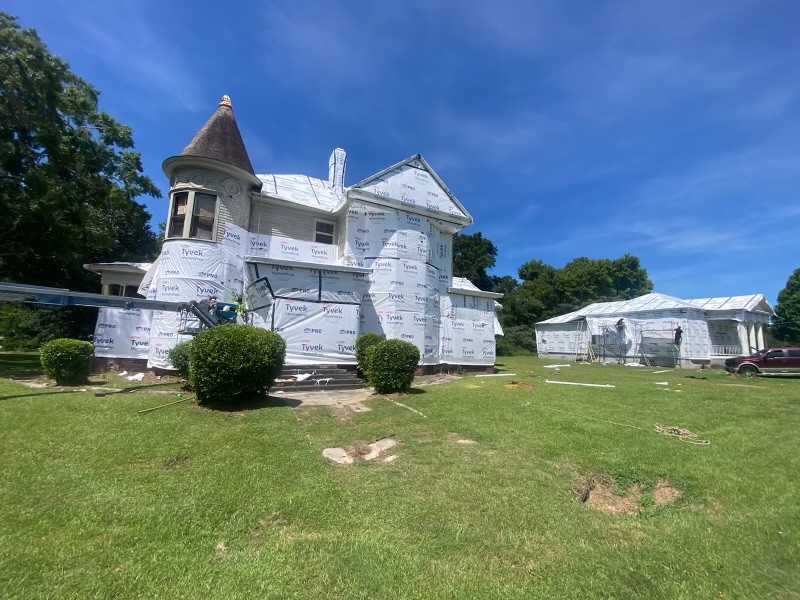
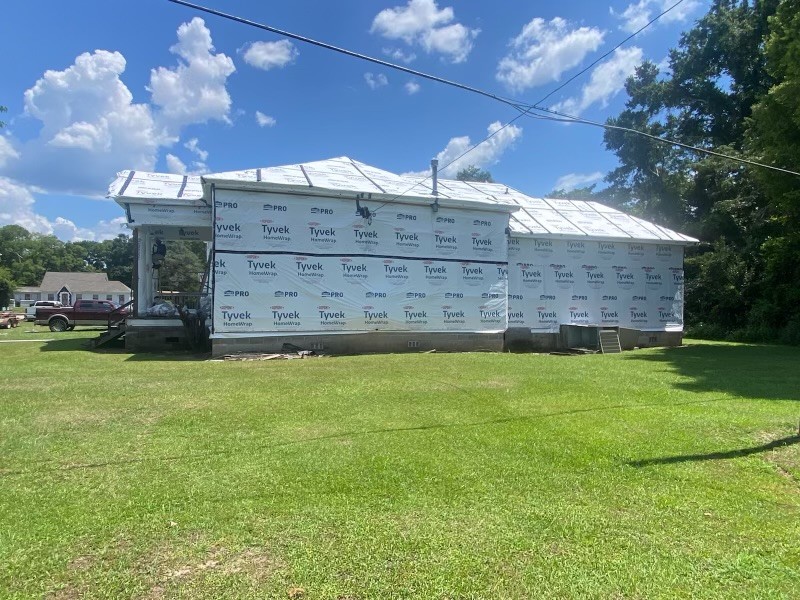
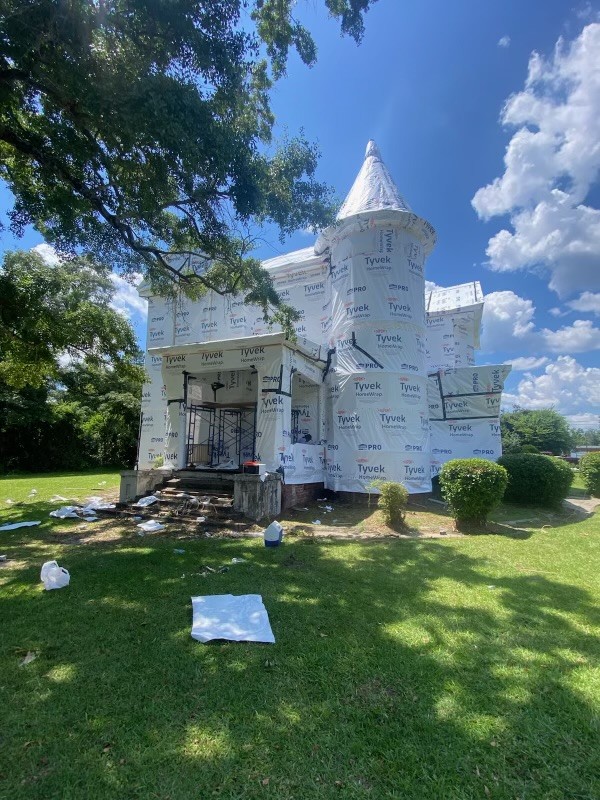
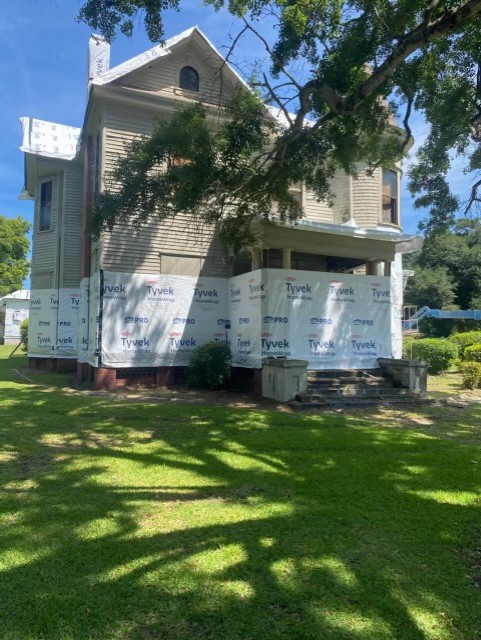
Two historic homes in Tuskegee, Alabama, are on the path to preservation. The Sadler House, built c. 1890s, and the Calloway House, built c. 1840s, were wrapped in protective Tyvek material last month, insulating the buildings’ leaking roofs, siding, and interiors from the damaging effects of heavy rains.
The protective wrapping is a temporary measure that’s part of a long-term preservation plan by the buildings’ owners, the Macon County Health Care Authority (MCHCA), to save the historic buildings from destructive water damage while opportunities for rehabilitation are explored.
Both buildings are prominent, long-vacant features of Water Street in Tuskegee’s North Main Street Historic District. The Calloway House is named for Clinton James Calloway, owner of the home from 1902 to 1937 and former Extension Department Director at Tuskegee Institute for forty years. Calloway was responsible for managing the Institute’s Rosenwald School building program—a joint effort of Booker T. Washington of the Tuskegee Institute and Julius Rosenwald of Sears & Roebuck Co. to fund the construction of quality schoolhouses for African American children throughout the rural South. The Calloway House is a prime example of antebellum architecture and was photographed by the Historic American Building Survey (HABS) in the 1930s. The Sadler House is named after its former owner James Harvey Sadler, local businessman and interim Sheriff of Macon County from 1964-1966, but it was likely constructed by Charles Woodrolph Hare. Hare was the owner and editor of The Tuskegee News (1895-1930) and a Tuskegee Institute Board of Trustees member under Booker T. Washington’s leadership. Hare is named in Washington’s autobiography Up From Slavery (1901) as he accompanied Dr. Washington to persuade U.S. President William McKinley to visit the Tuskegee Institute. The trip was successful, and President McKinley visited Tuskegee in December 1898.

The first steps toward the buildings’ preservation were taken earlier this year. When the MCHCA board wanted to understand the feasibility of saving these homes and adapting them for new use, they reached out to Lathan Development. To help the board with its decision-making, Lathan prepared a comprehensive Historic Restoration Assessment that detailed the history of each house and its owners, identified defining architectural character and areas of deterioration, and outlined plans for potential rehabilitation and reuse of the buildings.
One of the assessment’s primary recommendations was to secure the buildings from further water intrusion—via leaking and failing roofs, missing siding, and broken windows—that would compound damage to the houses’ historic interiors and jeopardize future preservation efforts. Using lifts, manpower, and more than eighteen thousand square feet of Tyvek HomeWrap Pro material, both buildings were wrapped from roof to railing by The Lathan Company, a historic restoration contractor.
The Sadler and Calloway Houses represent important architectural and historical eras of Tuskegee, and Lathan is proud to be involved with the ongoing preservation efforts for these two buildings.
 Lathan Development
Leave a comment